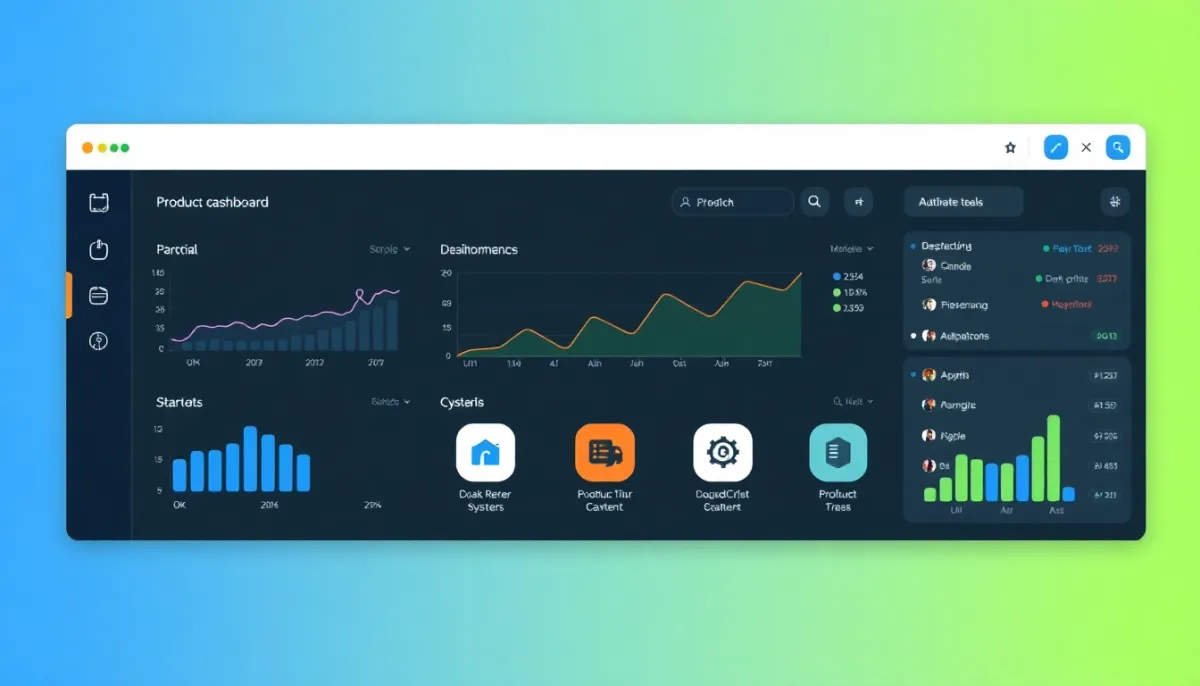
Streamline project tracking with our AI-powered semantic search system, providing real-time insights and efficient status reporting for product managers.
Semantic Search System for Project Status Reporting in Product Management
In the ever-evolving world of product management, tracking project progress and status is crucial to ensure timely completion, identify potential roadblocks, and make informed decisions that impact product development. Traditional reporting methods often rely on manual updates, spreadsheets, or email chains, which can be time-consuming, prone to errors, and hinder the ability to extract valuable insights from project data.
A semantic search system can revolutionize how teams report and track project status, providing a powerful tool for product managers to gain visibility into project performance. By leveraging natural language processing (NLP) and machine learning algorithms, a semantic search system can analyze large volumes of unstructured text data, such as meeting notes, emails, and project updates, to provide accurate and up-to-date information on project status.
Some key features of a semantic search system for project status reporting include:
- Ability to extract relevant information from unstructured text data
- Real-time tracking and analytics
- Customizable dashboards for easy access to critical metrics
- Integration with popular collaboration tools, such as Slack or Trello
Problem Statement
The current state of project management involves manual tracking and reporting, which leads to inefficiencies and inaccuracies. Product managers struggle to provide up-to-date information on project status, making it challenging to make informed decisions.
Some specific pain points in the current system include:
- Inconsistent data entry across different tools and platforms
- Lack of real-time visibility into project progress
- Difficulty in identifying potential roadblocks or bottlenecks
- Manual updates can be time-consuming and prone to errors
- Insufficient insights to measure project performance and success
These issues hinder the ability of product managers to effectively communicate project status, leading to delayed decision-making and decreased team productivity.
Solution Overview
To build a semantic search system for project status reporting in product management, we can leverage natural language processing (NLP) and machine learning techniques.
System Architecture
Our proposed system consists of the following components:
- Text Preprocessing Pipeline: This stage involves tokenization, entity extraction, and part-of-speech tagging to normalize the input text.
- Knowledge Graph Construction: We create a knowledge graph that maps project-related entities (e.g., projects, teams, roles) to their respective attributes (e.g., status, deadline).
- Indexing and Retrieval: We utilize an inverted index to store the preprocessed texts and their corresponding metadata, allowing for efficient search queries.
Search Query Processing
To process search queries, we use the following steps:
- Query Preprocessing: The query is tokenized and normalized using a stemming or lemmatization algorithm.
- Entity Recognition: We identify relevant entities in the query (e.g., project names) to refine the search results.
- Ranking and Retrieval: Our system ranks search results based on their relevance, incorporating factors like frequency of mention and entity similarity.
Example Search Query
The following example demonstrates how our system handles a natural language search query:
Search Query: "What's the status of the project 'Product A'?"

Search Result:
- Project Name: Product A
- Status: In Progress
- Deadline: 2023-06-15
Next Steps
To further improve our semantic search system, we plan to integrate additional features such as:
- Entity Disambiguation: Resolving multiple entities with the same name.
- Contextual Understanding: Incorporating contextual information (e.g., user permissions) into search results.
- Continuous Learning: Updating our knowledge graph and machine learning models to adapt to evolving project data.
Use Cases
Use Case 1: Project Status Query
- As a Product Manager, I want to be able to query the semantic search system to retrieve projects with a specific status (e.g. “in progress”, “on hold”, etc.) so that I can quickly identify which projects are currently being worked on.
- Example query:
SELECT * FROM project WHERE status = "in_progress"
Use Case 2: Customized Reporting
- As a Product Manager, I want to be able to customize the reporting of project statuses (e.g. only show projects with a specific status or multiple statuses) so that I can get the information I need in a way that makes sense for my workflow.
- Example query:
SELECT * FROM project WHERE status IN ("in_progress", "on_hold") AND team = "Development"
Use Case 3: Search by Multiple Criteria
- As a Product Manager, I want to be able to search for projects based on multiple criteria (e.g. status, team, deadline) so that I can quickly find the information I need.
- Example query:
SELECT * FROM project WHERE status = "in_progress" AND team = "Development" AND deadline >= "2023-03-01"
Use Case 4: Filtering and Sorting
- As a Product Manager, I want to be able to filter and sort search results based on various criteria (e.g. status, priority, deadline) so that I can easily prioritize my work.
- Example query:
SELECT * FROM project WHERE status = "in_progress" ORDER BY deadline ASC
Use Case 5: Integration with Project Management Tools
- As a Product Manager, I want to be able to integrate the semantic search system with our existing project management tools (e.g. Jira, Trello) so that I can get real-time updates on project status and progress.
- Example integration with Jira API:
SELECT * FROM project WHERE status = "in_progress" AND assigned_to IN (SELECT user_id FROM jira_users)
These use cases highlight the flexibility and power of our semantic search system for project status reporting in product management.
Frequently Asked Questions
Q: What is semantic search and how does it apply to project status reporting?
A: Semantic search is a technology that enables computers to understand the context and meaning of words and phrases in natural language. In the context of project status reporting, semantic search helps you find relevant information more efficiently by analyzing the semantics of keywords and phrases in your reports.
Conclusion
In conclusion, implementing a semantic search system can significantly enhance the efficiency and effectiveness of project status reporting in product management. By leveraging natural language processing and machine learning algorithms, teams can quickly and accurately retrieve relevant information, reducing the time spent on manual data analysis.
Some key benefits of this approach include:
- Improved Reporting: With a semantic search system, reports can be generated with more accuracy and speed, enabling teams to make informed decisions faster.
- Enhanced Collaboration: By providing easy access to project status updates, team members can collaborate more effectively, reducing misunderstandings and miscommunications.
- Data-Driven Decision-Making: The ability to quickly retrieve relevant data enables teams to make data-driven decisions, ensuring projects are on track and addressing any issues promptly.
While implementing a semantic search system requires initial investment in infrastructure and training, the long-term benefits far outweigh the costs. As product management continues to evolve, it’s essential that tools like this stay at the forefront of innovation.