Juuh — Car Sharing Marketplace
A renter needs a car for particular dates in a particular place. An owner needs to know who is asking, what they will earn and what happens if plans change. Juuh brings those two journeys into a peer-to-peer rental marketplace in Spain.
Renewator designed and built the platform. The public site now includes a searchable vehicle catalogue, individual listings and a request-to-book flow. This case follows the customer-facing experience available in October 2026.
Visit juuh.com · Read the marketplace design article
Who Juuh is for
Renters choosing a vehicle for a specific trip. Visitors may need a car for several days; residents may need temporary transport. In either case, seats, transmission, pickup location and luggage needs can matter as much as the daily rate.
Local owners who want to offer available days for rent. A host needs control over the listing, price and calendar, plus enough information to decide whether to accept a request. The host journey explains those responsibilities before asking the owner to create a listing.
Juuh is most useful when there is suitable local supply and time to coordinate with a host. Someone who needs an immediately confirmed vehicle should check the booking mode and pickup arrangements before choosing a listing.
Why the product exists
A private rental can become a long exchange of messages: is the car available, where is pickup, what is included and who confirms the booking? Information may arrive in a different order from the decisions the renter needs to make.
Juuh gives that agreement a consistent structure. A vehicle has a listing, a set of dates, rental rules and a booking state. Both sides can refer to the same information instead of reconstructing the arrangement from a conversation.
The practical objective is to make a request specific enough for an owner to answer and the conditions clear enough for a renter to compare.
What Juuh offers
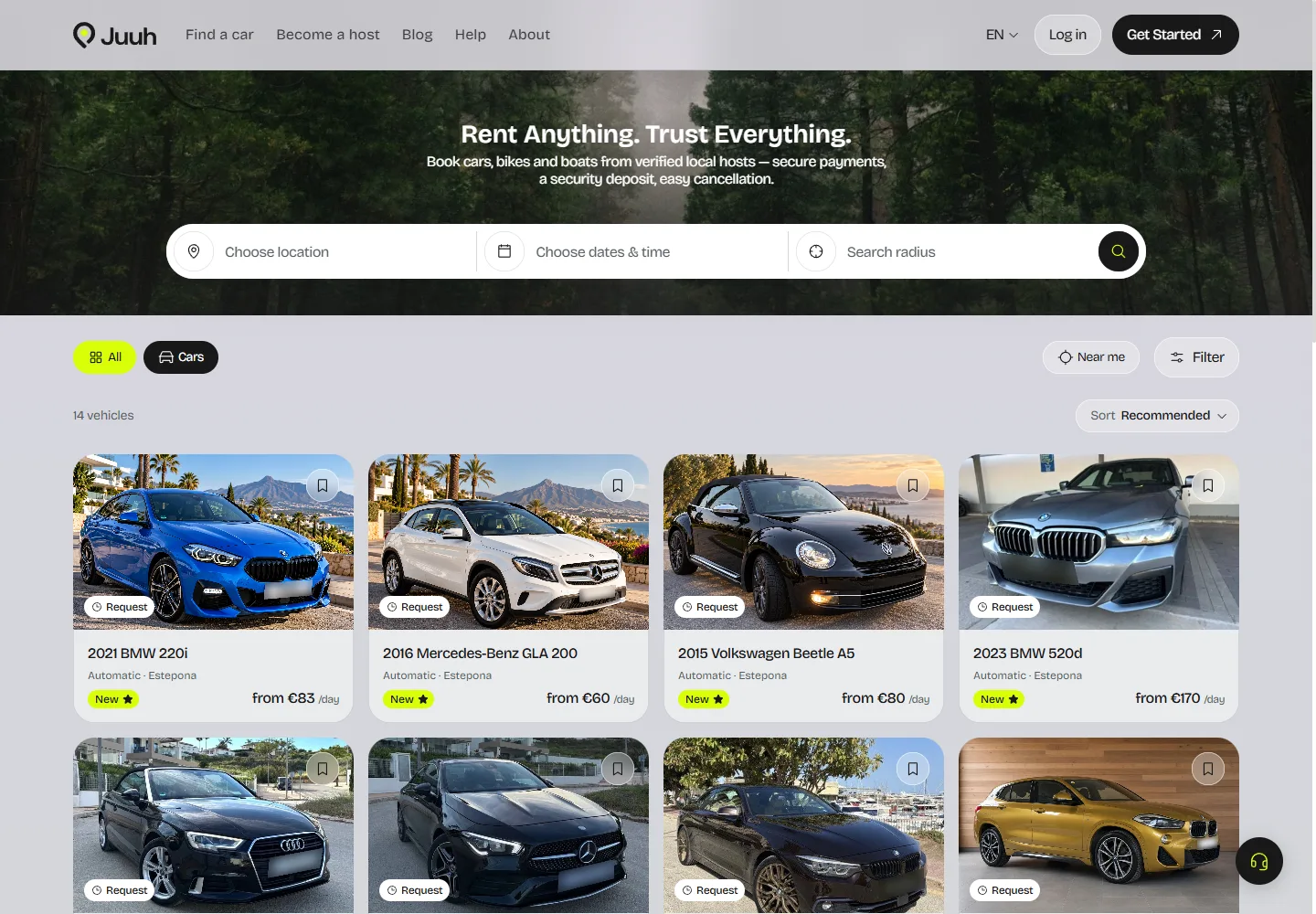
- Vehicle discovery: search by location, dates, time and radius, with photographs and essential specifications in the results.
- Individual listings: a vehicle page connects the car, its host, pickup area and rental conditions.
- Booking requests: the inspected listing identifies host approval as a step and states a response window.
- Conditions before commitment: mileage, deposit and cancellation information are available on the listing.
- A host onboarding route: owners can learn about listing a car, choosing a price, approving requests and estimating earnings.
A starting daily rate helps compare the catalogue. The renter still needs to review the quote for their dates and the conditions attached to that vehicle.
How the rental journey works
The following screens show how the product connects those decisions, from discovery to a request that the owner can assess.
Start with a place, a date and an actual car
The search begins with location, dates and time, and radius. Results show the vehicle, transmission, location and starting daily price. A booking label tells the renter whether they need the host’s approval.
This matters because a marketplace listing represents a specific owner’s vehicle. The renter is choosing the car in the photograph, with its own pickup arrangements and rental rules. Those details need to survive the move from search results to checkout.
Put the rental conditions beside the booking decision
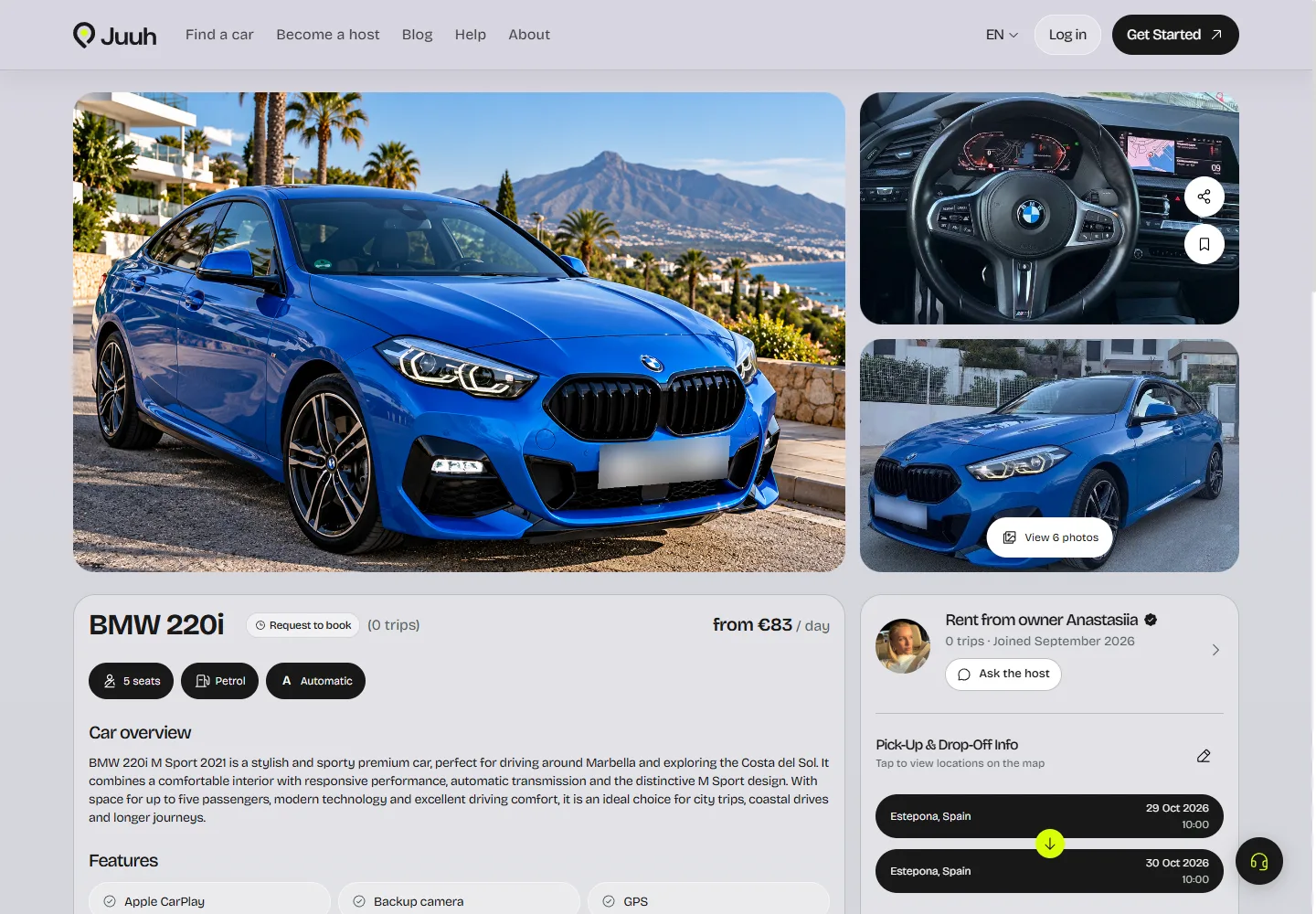
The vehicle page combines photographs, seat count, transmission, fuel type, equipment and pickup area. Further down, the renter can read the licence and age requirements, mileage allowance, security deposit and cancellation policy before requesting a booking.
The listing inspected for this case uses host approval, with a stated response window. It also explains when the exact pickup address is shared. These small pieces of information answer practical questions that would otherwise become a support conversation.
The page explicitly distinguishes the host’s insurance policy from the platform’s service. A deposit and insurance answer different questions; the interface needs to make both understandable before the renter commits.
Give the owner a separate route
Juuh’s host page introduces listing a vehicle, setting a price and approving bookings. It also provides an earnings calculator and host FAQs. That route addresses the owner’s decision before asking them to complete onboarding.
The product has two acquisition paths, but both lead to the same transaction. Vehicle details, availability, booking status and payment information need to stay consistent across them. That is the core product problem behind this platform development work.
Make the rules discoverable
The public navigation links to how Juuh works, trust and safety and payments and cancellations. These pages belong in the rental journey: someone comparing cars may also be comparing the consequences of cancelling or returning a vehicle late.
Juuh compared with other rental options
The useful comparison is how each route handles the agreement. Prices, availability and protection depend on the provider and vehicle; Juuh is not assumed to be the cheapest option for every trip.
| Option | When it can fit | What to check before booking |
|---|---|---|
| Juuh | Choosing an individual local vehicle and coordinating with its host | Approval mode, pickup, dated quote and vehicle terms |
| A rental company’s booking site | Booking from a managed fleet or staffed location | Vehicle category, collection hours and contract conditions |
| A rental comparison site | Comparing offers from several rental suppliers | Which supplier fulfils the booking and whose terms apply |
| A private classified advert | Making an arrangement directly with an owner | How availability, payment, identity and the agreement are documented |
Questions before choosing Juuh
Does sending a request mean my booking is confirmed?
Read the booking label for the selected vehicle. Where host approval is required, submitting a request and receiving a confirmed reservation are separate events. Plan around the stated response window.
Does a security deposit tell me what is insured?
A card hold and insurance coverage serve different purposes. Review the terms for the selected vehicle and clarify the host’s coverage and your responsibilities before booking. Do not infer coverage from the deposit amount.
What should an owner decide before listing a car?
Start with realistic availability, pickup arrangements and the responsibilities attached to a rental. The earnings calculator is a planning aid rather than guaranteed income. A listing also needs time for communication and handover.
What this case demonstrates
The core of the marketplace is a shared agreement between two parties. Search, listings, host onboarding and booking states each supply information that the next step depends on. Our product design work connects those steps so people understand what they are requesting and what happens next.
Screenshots show the public website in October 2026. Vehicle availability and prices can change.