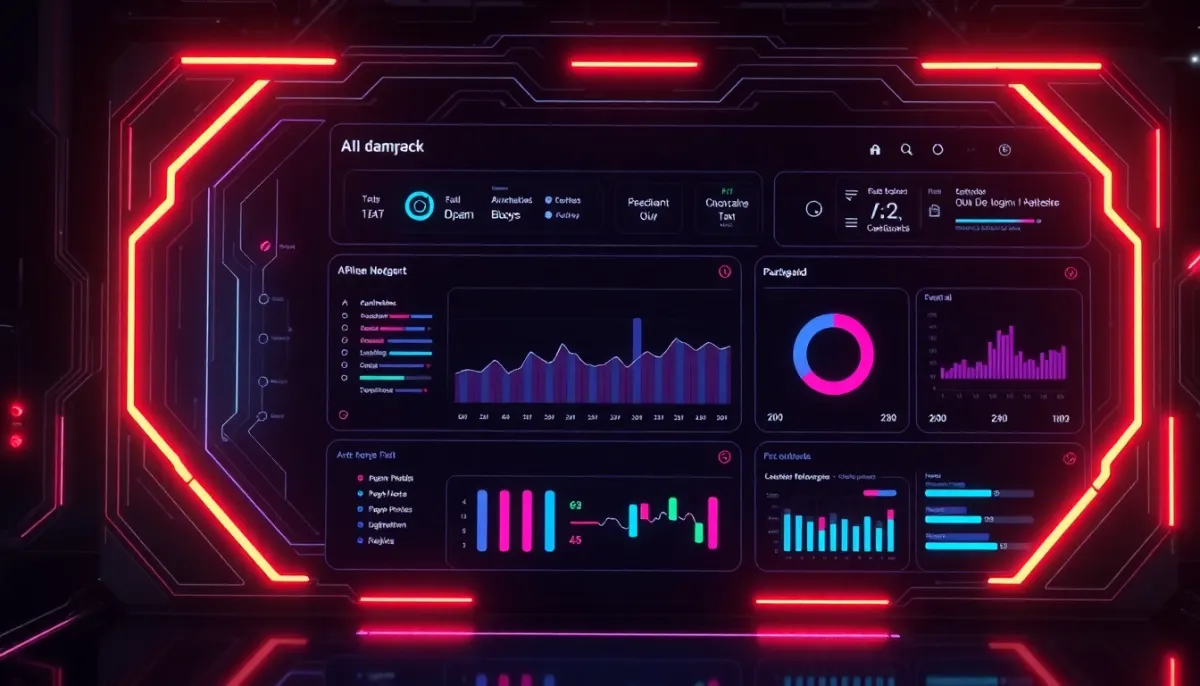
Automate data visualization in HR with our open-source AI framework, streamlining reporting and decision-making processes.
Automating Data Visualization for Human Resources with Open-Source AI
As the world of work continues to evolve, Human Resources (HR) departments are facing increasing demands to make data-driven decisions quickly and efficiently. However, manual data analysis and visualization can be time-consuming and prone to errors, hindering HR teams’ ability to unlock insights from large datasets.
To bridge this gap, open-source AI frameworks have emerged as a game-changer for automating data visualization in HR. These frameworks enable organizations to leverage artificial intelligence (AI) and machine learning (ML) techniques to automate the process of visualizing complex HR data, freeing up staff to focus on high-value tasks.
Some key benefits of using an open-source AI framework for data visualization automation in HR include:
- Scalability: Handle large datasets with ease
- Flexibility: Customizable visualizations and reports tailored to specific business needs
- Cost-effectiveness: Reduce reliance on expensive commercial software solutions
- Improved decision-making: Faster access to accurate insights, enabling data-driven HR strategies
Current Challenges in HR Data Visualization Automation
Currently, HR teams face several challenges when it comes to automating data visualization for insights and decision-making:
- Manual data import and formatting can be time-consuming and prone to errors
- Limited access to pre-built visualizations and dashboards that cater to specific HR use cases
- Difficulty in integrating multiple data sources and systems into a single, cohesive platform
- High costs associated with customizing or developing new visualizations from scratch
- Inability to easily collaborate with stakeholders across the organization
These challenges can hinder the efficiency and effectiveness of HR teams in making data-driven decisions. The need for an open-source AI framework that automates data visualization presents a promising solution to address these pain points.
Solution
The proposed open-source AI framework for data visualization automation in HR can be implemented using the following steps:
Step 1: Data Collection and Preprocessing
Utilize APIs to collect HR-related data from various sources such as employee databases, time-tracking systems, and performance management platforms.
| Data Source | API/Interface |
|---|---|
| Employee Database | HRMS API |
| Time-Tracking System | TTS API |
| Performance Management Platform | PMP API |
Preprocess the collected data to ensure it’s in a suitable format for machine learning model training. This may involve handling missing values, normalizing data, and removing irrelevant features.
Step 2: Model Training
Train machine learning models using the preprocessed data to predict HR-related metrics such as employee turnover, time-to-hire, or employee engagement.
| Machine Learning Algorithm | Description |
|---|---|
| Random Forest | Handles complex relationships between variables |
| Gradient Boosting | Optimizes for accuracy and interpretability |
Step 3: Data Visualization
Utilize the trained models to generate automated visualizations of HR-related metrics. This can be achieved using libraries such as Matplotlib, Seaborn, or Plotly.
| Visualization Tool | Description |
|---|---|
| Matplotlib | Provides basic visualization capabilities |
| Seaborn | Offers statistical graphics and data visualization tools |
| Plotly | Enables interactive visualizations |
Step 4: Automation
Integrate the data visualization tool with a scheduling system to automate the generation of visualizations at regular intervals.
| Scheduling Tool | Description |
|---|---|
| Apache Airflow | Manages workflows and schedules tasks |
| Celery | Provides distributed task queueing and message broker |
Example Use Case:
Automate the generation of an employee engagement dashboard using the trained model, visualization tool, and scheduling system. The dashboard can be updated daily to reflect current trends in employee engagement.
import pandas as pd
from sklearn.ensemble import RandomForestClassifier
from matplotlib import pyplot as plt

# Load preprocessed data
df = pd.read_csv('engagement_data.csv')

# Train model
model = RandomForestClassifier()
model.fit(df.drop('engagement', axis=1), df['engagement'])

# Generate visualization
plt.plot(model.predict(df.drop('engagement', axis=1)))
plt.title('Employee Engagement Trends')
plt.xlabel('Time Period')
plt.ylabel('Engagement Score')
plt.show()

# Schedule update
import schedule
import time

def update_dashboard():
    # Update model and generate new visualization
    pass

schedule.every(1).day.do(update_dashboard)

while True:
    schedule.run_pending()
    time.sleep(60)
This solution provides a comprehensive framework for automating data visualization in HR using open-source AI technologies. By leveraging APIs, machine learning algorithms, and data visualization tools, organizations can gain valuable insights into employee behavior and performance, ultimately driving informed decision-making and business growth.
Use Cases
Our open-source AI framework for data visualization automation in HR offers a wide range of use cases to streamline HR processes and improve decision-making. Here are some examples:
- Automated Employee Onboarding: Integrate our framework with your HRIS to automate the onboarding process, reducing manual errors and increasing efficiency.
- Predictive Analytics for Talent Acquisition: Leverage machine learning algorithms to predict employee turnover, identify top talent candidates, and optimize recruitment processes.
- Personalized Development Planning: Use natural language processing (NLP) to analyze employee feedback and generate personalized development plans, ensuring employees receive targeted support.
- Automated Performance Management: Streamline performance reviews by automating the calculation of key performance indicators (KPIs), reducing bias and increasing accuracy.
- Predictive Analytics for Employee Engagement: Identify potential issues before they become major problems using predictive modeling and machine learning algorithms.
- Integration with HR Systems: Seamlessly integrate our framework with popular HR systems, such as Workday, BambooHR, or ADP Workforce Now, to ensure a smooth user experience.
- Customizable Dashboards: Create custom dashboards that cater to your organization’s specific needs, providing actionable insights and data-driven decision-making.
By automating data visualization and analysis, our framework empowers HR professionals to make data-driven decisions, improve employee experiences, and drive business growth.
FAQ
General Questions
- What is OpenHRVis?
OpenHRVis is an open-source AI framework designed to automate data visualization in Human Resources (HR) management. - Is OpenHRVis free to use?
Yes, OpenHRVis is completely free and open-source, allowing individuals, businesses, and organizations to leverage its capabilities without any licensing fees.
Technical Questions
- What programming languages does OpenHRVis support?
OpenHRVis supports Python 3.8+ as the primary language for development. - Can I integrate OpenHRVis with my existing HR system?
Yes, our API documentation provides detailed instructions on how to integrate OpenHRVis with popular HR systems and databases.
Deployment and Maintenance
- Do I need to install OpenHRVis on my server?
No, you can deploy OpenHRVis as a cloud-based service, making it accessible from anywhere. - How do I update OpenHRVis when new versions are released?
We provide automated updates through our GitHub repository, ensuring you stay up-to-date with the latest features and security patches.
Performance and Scalability
- Can OpenHRVis handle large datasets?
Yes, OpenHRVis is optimized for performance and can handle large datasets, making it suitable for organizations with extensive HR data. - How many concurrent users can OpenHRVis support?
Our framework is designed to scale horizontally, supporting multiple concurrent users without significant performance degradation.
Conclusion
In conclusion, an open-source AI framework can revolutionize data visualization automation in HR by providing a scalable and flexible solution for automating the process of extracting insights from large datasets. By leveraging machine learning algorithms and natural language processing capabilities, these frameworks can quickly analyze HR data, identify patterns, and generate actionable reports.
Some potential applications of this technology include:
- Automated generation of compliance reports using chatbots
- AI-driven talent pipeline management with predictive analytics
- Predictive forecasting for employee turnover rates
While there are challenges to implementing such a framework, the benefits far outweigh the costs. By harnessing the power of open-source AI frameworks, HR teams can focus on high-level strategy and decision-making, while leaving the data analysis to the machines.