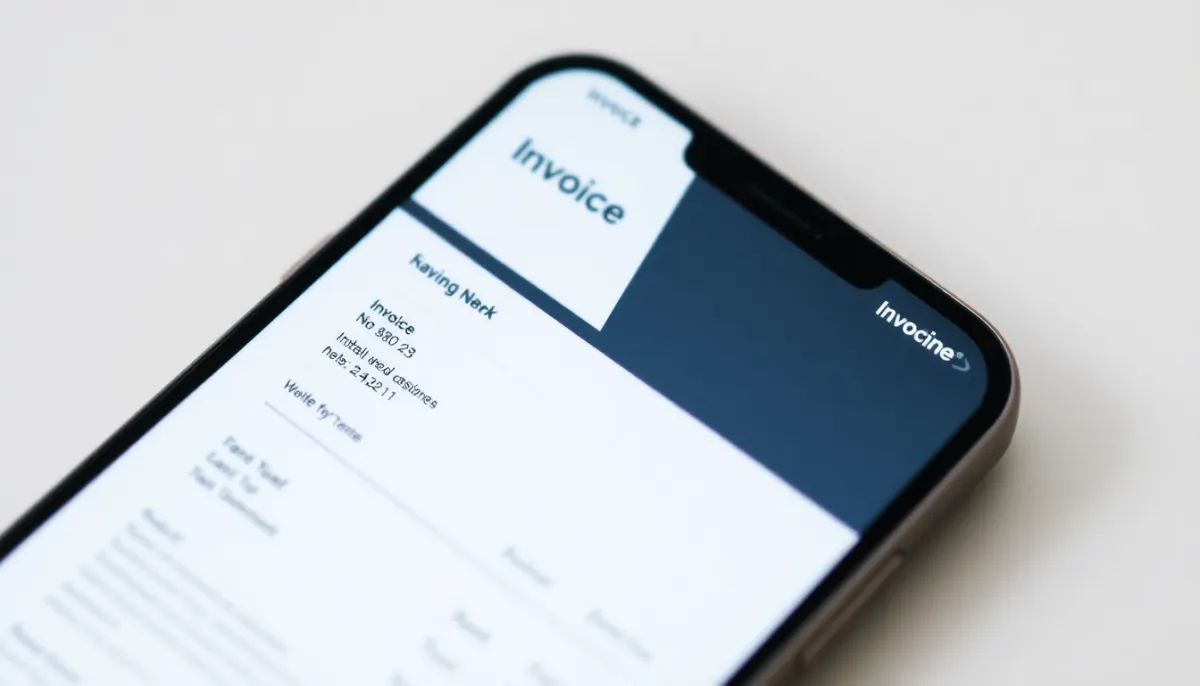
GPT Bot Automates Invoice Processing for Mobile Apps
Streamline invoice processing with our AI-powered GPT bot, automating tasks and reducing errors in your mobile app development workflow.
Streamlining Invoice Processing with AI-Powered GPT Bots
As a mobile app developer, you’re likely familiar with the challenges of managing invoices and payments within your application. Manual processing of invoices can be time-consuming, prone to errors, and often leads to frustration for both users and administrators alike. Fortunately, advancements in Artificial Intelligence (AI) have led to the development of powerful GPT bots that can revolutionize invoice processing in mobile app development.
Some key benefits of integrating a GPT bot into your mobile app include:
- Automated invoice recognition and extraction
- Real-time payment processing and tracking
- Enhanced security and reduced risk of data breaches
- Improved user experience through personalized and intelligent invoicing
In this blog post, we’ll explore how GPT bots can be leveraged to simplify invoice processing in mobile app development and discuss the potential for increased efficiency, accuracy, and customer satisfaction.
Problem Statement
In today’s digital age, businesses are increasingly looking for efficient ways to manage their invoices and payments. However, manual data entry and paper-based invoicing methods can be time-consuming, prone to errors, and costly.
Common pain points in invoice processing include:
- Inefficient paperwork management
- Difficulty in tracking and following up on outstanding invoices
- High risk of lost or misplaced documents
- Manual data entry and calculations for accurate payment processing
- Compliance with regulatory requirements such as tax laws and industry standards
Mobile apps are a popular choice for businesses to manage their daily operations, but integrating invoice processing into these apps can be challenging. The lack of automation and manual intervention leads to errors, delays, and increased costs.
Some specific challenges faced by mobile app developers when implementing invoice processing include:
- Integrating document scanning and OCR capabilities
- Handling multiple payment methods and currencies
- Ensuring data security and compliance with regulations
- Developing a user-friendly interface for easy invoicing and payment management
Solution
To integrate GPT into your mobile app for invoice processing, follow these steps:
- Choose a GPT Library: Select a suitable GPT library that can be integrated into your mobile app, such as Hugging Face’s Transformers or Google Cloud’s AutoML.
- Configure the Model: Train and fine-tune the GPT model on a dataset of invoices to improve its accuracy and understanding of invoice formats, templates, and content.
- Design the User Interface: Create an intuitive user interface for users to upload invoices, select processing options (e.g., auto-categorization, bill splitting), and view the processed invoices.
- Integrate with Existing Systems: Connect your app to existing accounting or payment systems to streamline invoice processing, approval workflows, and payment settlements.
Example Code
# Example GPT-based Invoice Processing Code

import pandas as pd
from transformers import AutoModelForCausalLM, AutoTokenizer

# Load pre-trained model and tokenizer
model = AutoModelForCausalLM.from_pretrained("huggingface/parlai-models")
tokenizer = AutoTokenizer.from_pretrained("huggingface/parlai-models")

def process_invoice(invoice_text):
    # Preprocess invoice text for input to the GPT model
    input_text = tokenizer.encode_plus(
        invoice_text,
        truncation=True,
        max_length=512,
        return_attention_mask=True,
        return_tensors="pt",
    )

    # Run the preprocessed text through the GPT model
    output = model.generate(input_text["input_ids"], max_length=512)

    # Postprocess the output to extract relevant information
    invoice_data = tokenizer.decode(output[0], skip_special_tokens=True)

    return invoice_data

invoice_text = "Invoice for services rendered on 01/01/2023"
processed_invoice = process_invoice(invoice_text)
print(processed_invoice)
Benefits and Limitations
The GPT-based solution offers several benefits, including:
* Improved accuracy in invoice processing due to AI-driven understanding of invoice formats and content.
* Enhanced user experience through intuitive interfaces and streamlined workflows.
However, it also comes with limitations:
* Dependence on high-quality training data and pre-trained models may affect performance.
* Requires significant computational resources for model training and inference.
Use Cases
A GPT bot integrated into a mobile app can automate various aspects of invoice processing, enhancing user experience and reducing manual labor.
Payment Processing
- Automated Invoicing: The GPT bot generates invoices based on predefined templates and data from the app’s inventory management system.
- Invoicing Reminders: The bot sends reminders to customers with outstanding invoices, helping to reduce late payments.
- Payment Verification: The bot verifies payment methods and confirms transactions in real-time.
Inventory Management
- Item Descriptions: The GPT bot generates item descriptions based on product data, improving search functionality within the app.
- Product Recommendations: The bot provides users with personalized product recommendations based on their purchasing history.
Customer Support
- Invoice Tracking: The bot allows customers to track their invoices and payment status in real-time.
- Support Tickets: The GPT bot handles customer support inquiries, routing complex issues to human customer support agents when needed.
Security and Compliance
- Data Encryption: The app’s data is encrypted using robust encryption methods to protect sensitive information from unauthorized access.
- Compliance Checks: The GPT bot performs automated compliance checks to ensure the app meets regulatory requirements.
Frequently Asked Questions
General Inquiries
Q: What is GPT and how does it relate to my mobile app?
A: GPT stands for Generative Pre-trained Transformer. It’s a type of artificial intelligence (AI) model that can be used to automate tasks such as invoice processing in your mobile app.
Technical Requirements
Q: Do I need any specific hardware or software to use GPT for invoice processing?
A: No, our GPT bot is cloud-based and can be integrated with most mobile app development platforms. However, a stable internet connection is required for the bot to function properly.
Conclusion
Implementing a GPT bot for invoice processing in a mobile app can significantly enhance user experience and streamline financial operations. The key benefits of this integration include:
- Improved accuracy: GPT bots excel at data analysis and pattern recognition, ensuring accurate parsing and classification of invoices.
- Enhanced automation: Automated invoice processing reduces manual labor, minimizing errors and increasing productivity.
- Real-time updates: Integration with cloud-based services enables real-time updates on invoice status, ensuring users stay informed.
While the implementation process requires careful planning and testing, the results can be substantial. By leveraging GPT bots for invoice processing in mobile app development, developers can create more efficient, user-friendly applications that support businesses and individuals alike.