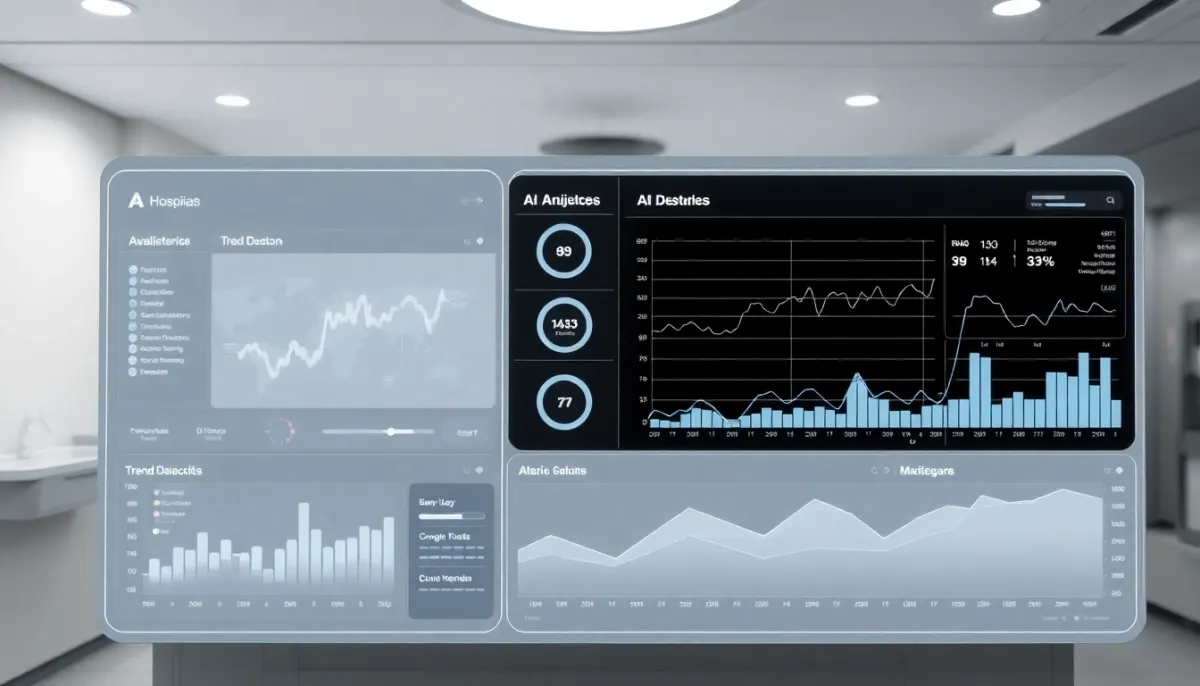
AI Model Deployment System for Healthcare Trend Detection & Analysis
Deploy and monitor AI models for accurate trend detection in healthcare, empowering data-driven insights and informed decision-making.
Unlocking Early Warning Systems in Healthcare: AI Model Deployment for Trend Detection
The healthcare industry is facing an unprecedented surge in data generation, with millions of patients’ health records and medical devices producing vast amounts of structured and unstructured data every day. As the volume of this data continues to grow exponentially, healthcare organizations are struggling to identify early warning signs of emerging trends that could impact patient outcomes, resource utilization, or even life.
That’s where AI comes in – a powerful tool capable of analyzing complex patterns and anomalies in large datasets to provide actionable insights for trend detection. However, deploying AI models into production-ready environments is a daunting task, requiring a deep understanding of the underlying technology, domain expertise, and rigorous testing processes.
In this blog post, we will explore a novel approach to addressing this challenge: an AI model deployment system designed specifically for trend detection in healthcare. This system leverages cutting-edge technologies to streamline the deployment process, ensuring that AI models can be rapidly integrated into existing workflows and provide timely insights to support informed decision-making.
Problem Statement
Traditional healthcare data analysis often relies on manual inspection and interpretation of trends, which can lead to delayed insights, decreased accuracy, and a high risk of errors. The sheer volume of healthcare data generated daily poses significant challenges for traditional methods of trend detection.
Key Challenges:
- Data Volume and Velocity: Healthcare data is vast and constantly changing, making it difficult to process and analyze in real-time.
- Data Variety: Healthcare data comes from various sources, including electronic health records (EHRs), medical imaging, and wearable devices, each with unique formats and structures.
- Lack of Domain Expertise: Without domain-specific knowledge, AI models may not accurately capture the nuances and complexities of healthcare trends.
- Limited Scalability: Traditional trend detection systems often struggle to scale to meet the demands of large-scale healthcare data analysis.
As a result, there is a pressing need for an AI model deployment system that can efficiently and accurately detect trends in healthcare data, enabling timely insights and improved patient outcomes.
Solution Overview
Our AI model deployment system for trend detection in healthcare is designed to provide real-time insights into patient data, enabling healthcare professionals to make informed decisions.
Architecture Components
1. Data Ingestion and Processing
- Utilize Apache Kafka for message queuing and data ingestion
- Leverage Apache Spark for batch processing of structured and semi-structured data
2. Model Training and Serving
- Employ TensorFlow or PyTorch for model training on a GPU cluster
- Use TensorFlow Serving or AWS SageMaker for model serving and inference
3. Real-time Data Streaming and Analysis
- Utilize Apache Kafka again, this time as the real-time data stream
- Leverage Apache Flink for real-time data processing and analysis
Key Features
- Scalability: Handle large volumes of patient data with ease, scaling horizontally to meet demand
- High Availability: Provide redundant systems for model serving and data storage to ensure minimal downtime
- Security: Implement robust encryption and access controls to protect sensitive patient data
- Flexibility: Support a wide range of machine learning algorithms and integrate with various data sources
Deployment Considerations
1. Cloud-Native Deployments
- Leverage cloud providers like AWS or GCP for scalable infrastructure
- Use containerization (e.g., Docker) and orchestration tools (e.g., Kubernetes)
2. Edge Computing Deployments
- Utilize edge computing devices (e.g., Raspberry Pi) for real-time data processing
Example Use Cases
1. Disease Surveillance
- Monitor patient data in real-time to detect early outbreaks of diseases
- Trigger alerts and notifications for healthcare professionals
2. Patient Risk Stratification
- Analyze patient data to identify high-risk patients and provide targeted interventions
Use Cases
Our AI model deployment system is designed to support various use cases across different healthcare domains. Here are some examples:
1. Disease Surveillance
- Monitor patient data in real-time to detect outbreaks and trends of infectious diseases.
- Use machine learning algorithms to identify high-risk areas, patients, and behaviors that may be contributing to the spread.
2. Predictive Maintenance for Medical Equipment
- Deploy AI models on IoT devices to predict when medical equipment is likely to fail or require maintenance.
- Schedule preventive maintenance to minimize downtime and ensure continuous patient care.
3. Personalized Medicine
- Analyze genomic data, medical history, and lifestyle factors to identify high-risk patients for specific diseases.
- Recommend targeted treatments based on individual patient profiles.
4. Medical Imaging Analysis
- Utilize computer vision techniques to analyze medical images (e.g., X-rays, CT scans) to detect abnormalities or tumors.
- Automate image analysis to reduce processing time and increase accuracy.
5. Patient Safety Monitoring
- Deploy AI models on electronic health records (EHRs) to identify potential safety risks for patients undergoing surgery or treatment.
- Receive real-time alerts when high-risk conditions are detected, enabling timely interventions.
6. Population Health Management
- Analyze large datasets to identify trends and patterns in population health outcomes.
- Inform policy decisions and optimize resource allocation to improve population health.
These use cases demonstrate the potential of our AI model deployment system to drive meaningful insights and improvements in various aspects of healthcare.
Frequently Asked Questions
General Questions
- Q: What is an AI model deployment system?
A: An AI model deployment system is a platform that enables the seamless integration of machine learning models into production environments, allowing for efficient and scalable deployment of AI models in real-time applications.
Deployment and Integration
- Q: How do I ensure data security during deployment?
A: We employ robust encryption methods and secure authentication protocols to protect sensitive healthcare data.
Performance and Scalability
- Q: How long does deployment typically take?
A: Our automated deployment process ensures minimal downtime and rapid deployment, usually within a few minutes.
Conclusion
In conclusion, an AI model deployment system for trend detection in healthcare can significantly improve patient outcomes by enabling early intervention and personalized care. By leveraging machine learning algorithms to analyze large datasets, these systems can identify subtle patterns and anomalies that may indicate potential health risks.
Some of the key benefits of deploying AI models for trend detection in healthcare include:
- Improved patient safety through early disease detection
- Enhanced quality of care with personalized treatment recommendations
- Reduced healthcare costs by preventing hospitalizations and reducing unnecessary procedures
- Increased operational efficiency for healthcare organizations
To ensure successful deployment, it is essential to consider the following best practices:
- Data quality and integrity: Ensure that high-quality data is used to train and validate AI models
- Model interpretability and explainability: Develop models that provide transparent and interpretable results
- Security and compliance: Implement robust security measures to protect sensitive patient data and ensure regulatory compliance