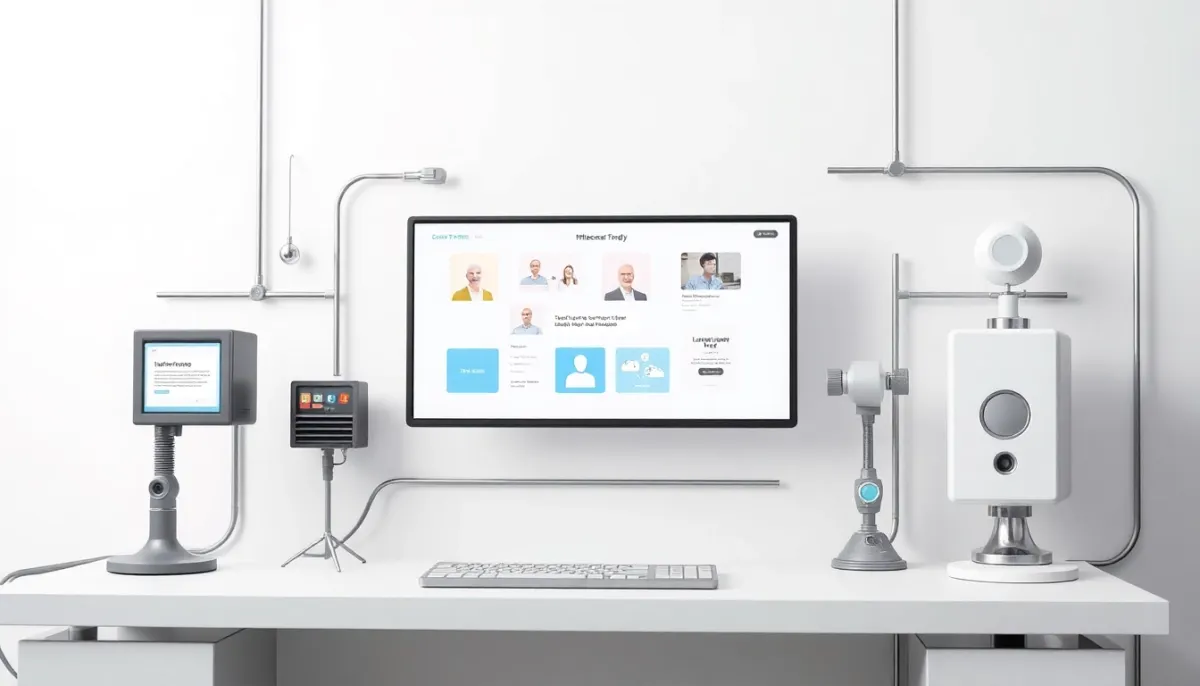
Workflow orchestration influencer marketing replaces scattered manual approvals with a single coordinated flow across contracts, payments, and analytics tools [1]. While automation handles individual tasks like email triggers, orchestration ensures these steps execute in the correct sequence without human intervention [5]. This distinction reduces cycle times and minimizes errors when managing hundreds of creator relationships simultaneously.
This article explains how to build that control layer for your agency or brand team. You will learn which technical components prevent data loss between CRM and finance systems, enabling scalable execution beyond simple point solutions [4].
Workflow Orchestration vs. Simple Automation
Automation executes a single action. It sends an email when a lead enters your CRM or generates a PDF invoice from raw data. These are isolated events that solve immediate efficiency problems but do not address process complexity. Your team still manages the transitions between these automated steps manually [1].
Orchestration connects those isolated actions into a reliable, end-to-end sequence. It creates a framework where tasks interact logically and integrate with multiple systems to complete a business process [1]. Without this layer, your tech stack becomes a patchwork of disconnected point solutions that rarely speak to one another [5].
Consider an influencer payout workflow:
- Automation: An RPA tool extracts invoice data from an email attachment.
- Orchestration: The system verifies the creator’s contract status in your legal database, checks budget availability in your finance API, and only then triggers the payment transfer while updating the campaign dashboard [5].
When tools do not communicate, you rely on manual handoffs to move data between systems. This introduces latency and increases the risk of human error during peak campaign periods [5]. Orchestration eliminates these gaps by governing the flow of data and decisions across disparate platforms, ensuring that every step executes in the correct order without requiring your team to switch contexts or copy-paste information manually [1].
The Integration Debt in Influencer Campaigns
Your marketing stack likely includes a CRM for creator management, an email platform for outreach, social schedulers for content distribution, and separate analytics dashboards for performance tracking. Each tool functions well in isolation. When you connect them without a central coordinator, you create integration debt [5]. This technical debt compounds with every new service added to your workflow, forcing your team to manage fragile point-to-point connections rather than reliable processes.
DIY automation solutions often suffice for initial pilots but fail under the strain of scaling campaigns across multiple regions or product lines [2]. Without a centralized governance layer, you lose visibility into where data is stuck or how decisions are being made between systems. The result is a patchwork of scripts and manual checks that break when one API changes its authentication method.
Consider the operational impact during a major launch:
- A creator updates their social handle in your CRM, but the change does not propagate to your ad tracking pixel configuration.
- Engagement metrics drop because the wrong UTM parameters are attached due to a mismatched data sync between your scheduling tool and analytics platform.
- Finance teams process payouts for inactive creators because the status update from the legal database never reached the payment gateway in time [5].
These errors do not stem from bad tools. They stem from uncoordinated execution. As you scale, the complexity of managing these disjointed systems grows exponentially, consuming more engineering and operations hours than the automation saves. You need a system that enforces state consistency across all platforms, ensuring data integrity regardless of which tool initiates the action [2].
How Orchestration Connects Your Marketing Stack
Orchestration acts as a centralized control layer that coordinates data flow between your CRM, content scheduling tools, and performance tracking systems [1]. Instead of relying on fragile point-to-point integrations, you establish a single source of truth for campaign state. This approach eliminates the technology silos that typically fragment marketing operations by ensuring seamless connectivity between cloud applications and on-premises databases [4].
Consider the technical flow when launching an influencer partnership:
- Initiation: A new creator is approved in your CRM, triggering a workflow event.
- Execution: The orchestration engine automatically pushes the approved contract details to your legal repository and generates unique tracking URLs for each creator’s social handles.
- Monitoring: As posts go live via your scheduling tool, the system captures engagement metrics and feeds them back into your analytics dashboard in real time.
Modern platforms leverage AI and machine learning to define these task sequences dynamically [1]. This allows the system to handle conditional logic—such as pausing a payout if initial engagement metrics fall below threshold levels—without human intervention. By managing the sequence of events centrally, you ensure that every action in one system triggers the correct corresponding update in others. This reduces integration debt and ensures that your marketing stack operates as a unified engine rather than a collection of disconnected utilities. For deeper insights on balancing automated efficiency with creative strategy, see our analysis on AI vs. Human: What Should (and Shouldn’t) Be Automated in 2025?.
Reducing Human Error in Campaign Execution
Manual handoffs between approval stages and scheduling tools introduce friction that breaks data consistency. When a marketing coordinator copies influencer details from an email thread into a spreadsheet, then manually enters those same details into your CRM and social scheduler, the risk of transcription errors increases with every step. Workflow orchestration minimizes this margin for error by ensuring precise execution across all connected systems [4].
Instead of relying on human memory or copy-paste accuracy, you configure the system to coordinate tasks like notifications, approvals, and system updates automatically [1]. This creates a single source of truth that moves with the campaign data. If an influencer approves a draft in one platform, the orchestration layer immediately triggers the next step without waiting for manual confirmation.
Consider the specific impact on your operational workflow:
- Automated Approvals: When a creative asset meets compliance checks, the system routes it to legal for sign-off and notifies the influencer simultaneously, eliminating email lag.
- Synchronization: Once approved, the post schedule updates across all social management tools instantly, preventing double-booking or missed launch times.
- Reporting Integrity: Final performance metrics pull directly from platform APIs into your analytics dashboard, removing manual calculation errors that skew ROI analysis.
By removing these manual touchpoints, you reduce the cognitive load on your team and ensure that every campaign executes exactly as planned. This level of control is essential when managing high-volume campaigns where a single scheduling error can impact brand perception.
Real-Time Visibility Across Campaign Stages
Managing an influencer campaign without orchestration creates blind spots. You likely have data scattered across your CRM for outreach status, Slack threads for creative feedback, and separate dashboards for ad spend and engagement metrics. When a post underperforms or a contract clause is missed, you waste hours hunting through disparate logs to diagnose the root cause [5].
Workflow orchestration consolidates these fragmented signals into a single pane of glass. This centralized view tracks every interaction from initial outreach to final payment, allowing you to monitor campaign health without switching contexts. You can identify bottlenecks immediately rather than discovering them after the launch window has closed.
This visibility transforms how your team responds to issues in real time:
- Status Tracking: See exactly which influencers are pending contract signatures versus those ready for creative submission.
- Error Diagnosis: Pinpoint whether a drop in engagement stems from a scheduling delay, a broken link, or an algorithm change.
- Compliance Monitoring: Verify that all required disclosures appear on live posts before they gain traction.
By maintaining this coherent view of the process flow, you reduce the friction between strategy and execution [4]. Your team spends less time reconciling data and more time optimizing performance based on accurate, up-to-date information.
Scaling with AI and Deterministic Execution
AI models excel at unstructured tasks like matching influencers or generating content variations. However, they lack inherent reliability for transactional steps. Relying on AI alone for execution introduces volatility. A model might suggest a high-potential creator but fail to trigger the contract generation or payment authorization that follows. This gap between insight and action creates operational risk as volume increases [3].
Effective workflow orchestration bridges this divide by pairing AI reasoning with deterministic execution. The system uses probabilistic models for decision-making while relying on rigid logic flows for state changes and data transfers. This hybrid approach ensures that creative flexibility does not compromise process integrity. You get the adaptive benefits of machine learning without sacrificing the predictability required for financial or compliance operations [6].
Consider a campaign scaling from ten to one thousand influencers simultaneously:
- Intelligent Matching: An AI agent analyzes past performance data to rank creators based on brand fit and audience engagement metrics.
- Deterministic Handoff: Once an influencer is selected, the orchestration layer automatically triggers a sequence of verified steps—sending the contract via DocuSign, updating the CRM record, and notifying the finance team for budget allocation.
If the AI component suggests a mismatched creator, it affects one data point. If the execution layer fails, it breaks the entire campaign loop. By treating orchestration as the nervous system that connects to the AI brain, you maintain control over complex cross-system processes [3]. This structure allows you to scale outreach efforts while keeping error rates low and audit trails clear. The system handles the volume; your team handles the strategy.
Building Your Orchestration Strategy: A Checklist
Most teams treat automation as a series of disconnected tools rather than a unified system. You likely have an RPA bot for data entry, a separate scheduler for social posts, and a CRM for relationship management. When these systems do not speak to each other, you create integration debt that compounds with every new tool added [5]. To fix this, audit your current stack against the following criteria before selecting a platform.
-
Centralize Governance Replace tool-by-tool scheduling with a single control plane. DIY automation works for simple tasks but fails under load because there is no central view of dependencies or failures [2]. A governed system ensures that if one step in your influencer onboarding process fails, the entire workflow pauses and alerts you, rather than silently dropping data into a void.
-
Verify Integration Depth Your orchestration layer must connect directly to your existing CRM, ERP, and cloud services without requiring custom middleware for every connection [1]. Check if the platform offers native connectors or robust APIs that can handle complex data payloads between systems like Salesforce, HubSpot, and payment gateways seamlessly.
-
Apply a Structured Scoring Framework Do not choose an orchestrator based on feature lists alone. Use a scoring framework to evaluate platforms against your specific technical requirements [6]. Assign weight to critical factors such as durable execution, observability, and audit logging. For influencer marketing, prioritize platforms that offer real-time monitoring and explainability so you can trace every decision back to its source data [6].
-
Support Hybrid Execution Ensure the platform supports both event-driven triggers and scheduled tasks across hybrid environments. Your workflow might start with an AI agent analyzing social trends, move through a human approval step in your CRM, and end with an automated invoice sent via email marketing software [2]. The orchestration layer must handle this mix of deterministic logic and human-in-the-loop interactions without breaking the chain.
By rigorously testing these points, you move from patchwork automation to a resilient operational engine. This approach reduces manual handoffs and ensures that your growth strategies are executed consistently at scale.
Next Steps for Operational Efficiency
Workflow orchestration moves your influencer program from experimental pilots to production-ready reliability [3]. You are not just automating tasks; you are building a governance layer that ensures every partnership follows the same verified path. This shift reduces cycle times by eliminating the latency of manual handoffs between disconnected tools [4].
When you scale partnerships, speed without control creates risk. A centralized system provides real-time visibility into each process stage, allowing you to audit decisions and maintain compliance across thousands of interactions [4]. You gain the ability to trace every approval back to its source data, ensuring that growth does not outpace your operational capacity.
To determine where automation adds value versus where human judgment remains critical, review our analysis on AI vs. Human: What Should (and Shouldn’t) Be Automated in 2025. This distinction ensures you apply orchestration only to high-volume, repeatable processes while preserving creative oversight for strategic decisions. We build these control planes so your marketing operations run with precision and scale without breaking.
If you want a second pair of eyes on this, tell us about your project — a senior engineer gives you an honest read on scope, cost, and whether our services fit. No sales pressure.
Frequently asked questions
What is the difference between automation and orchestration in influencer campaigns?
Automation handles single tasks like sending an email or generating a PDF. Orchestration coordinates multiple automated steps into a logical sequence, ensuring data moves correctly between systems without manual intervention.
How does workflow orchestration reduce integration debt?
It replaces fragile point-to-point connections with a centralized control layer. This ensures that changes in one system, such as a creator status update, propagate consistently to all connected tools like finance and analytics platforms.
Why do DIY automation solutions fail at scale?
DIY scripts often lack governance and error handling. As you add more creators or regions, the complexity of managing disjointed systems grows exponentially, leading to data mismatches and broken workflows when APIs change.
What technical components are needed for reliable orchestration?
You need a system that enforces state consistency across all platforms. This includes secure API connections, real-time data validation between CRM and finance systems, and automated logging to track where processes succeed or fail.
Sources
- What is Workflow Orchestration? - IBM
- Workflow Orchestration for Hybrid and Multi-Cloud Automation
- AI Workflow Orchestration: Why SOAP Is the Essential AI Control Plane
- Workflow Orchestration - AuraQuantic
- What Is Workflow Orchestration? The Enterprise Guide - Aptimeta
- Orkes: Modern Workflow Orchestration Platform