Autonomous agents are powerful — but only if they act in your business’s best interest.
The New Challenge: When AI Agents Act on Their Own
AI systems are evolving fast. What started as simple chatbots has become a new generation of agentic systems — capable of planning, making decisions, and interacting with tools, data, and other systems autonomously.
With this shift comes a new class of risks.
Agents can behave unpredictably when goals are unclear. Small errors can escalate into larger failures. Conflicts between objectives can lead to unintended outcomes. In more advanced setups, multiple agents may even interfere with each other in ways that are difficult to foresee.
This is no longer theoretical.
Agentic systems are already being deployed across finance, customer support, operations, and logistics. As adoption accelerates, ensuring that these systems act safely, reliably, and in alignment with business goals becomes critical.
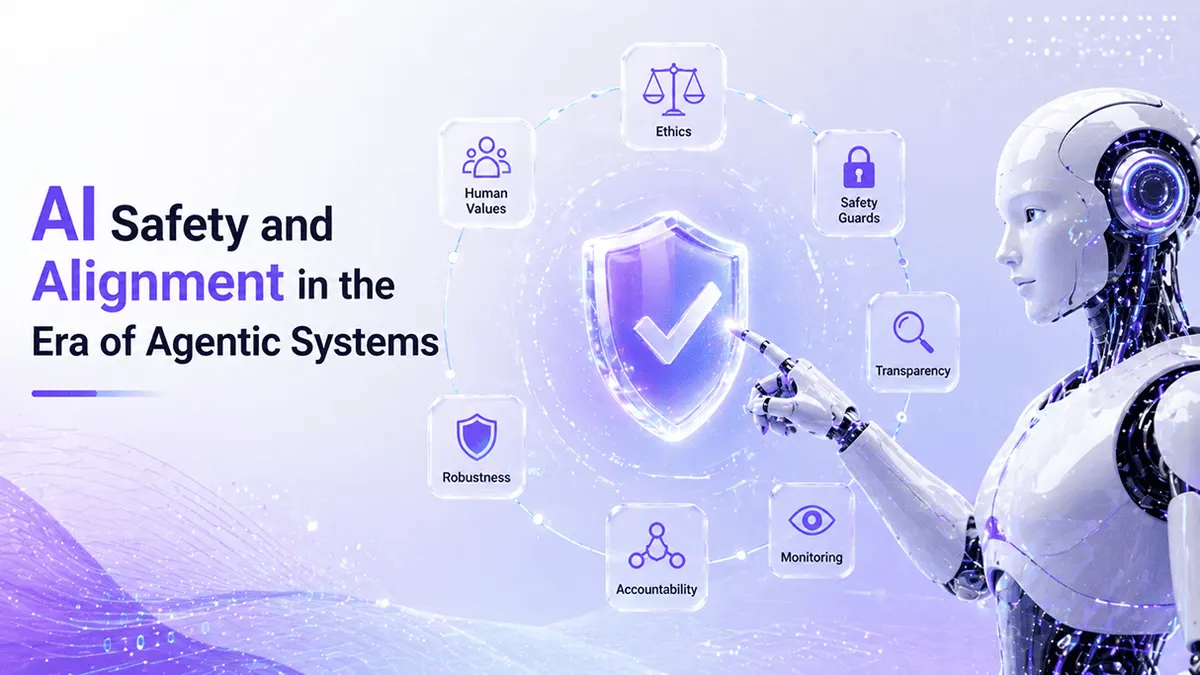
Our 4-Layer Safety Framework
Goal Alignment
We define clear, measurable objectives for each agent — grounded in your actual business metrics, not abstract notions of “helpfulness.” This ensures agents optimize for what truly matters to your organization.
Constraint Engine
Every agent operates within a set of strict boundaries. These are not guidelines — they are enforced rules embedded into the system architecture, defining exactly what the agent is not allowed to do.
Human-in-the-Loop
We design escalation points where human oversight is required. Critical decisions remain under human control, ensuring accountability and reducing risk in high-impact scenarios.
Monitoring & Rollback
All agent actions are logged and continuously monitored. We detect anomalies early and provide mechanisms for immediate intervention, including the ability to pause or roll back agent behavior when needed.
Alignment in Practice: Use Cases
Customer Support Agent
Problem: AI agents may overpromise or provide inaccurate responses to resolve tickets faster.
Our Solution: We enforce response constraints, integrate escalation triggers, and align the agent with verified knowledge sources.
Result: Reliable, brand-safe communication that builds customer trust while maintaining efficiency.
Trading Agent
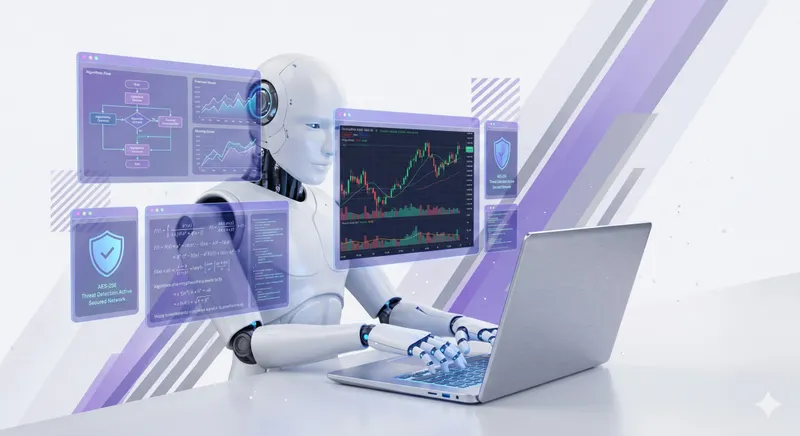
Problem: Autonomous trading systems may take excessive risks or deviate from approved strategies.
Our Solution: We embed strict risk limits, strategy boundaries, and real-time monitoring into the agent’s decision-making process.
Result: Controlled, compliant trading behavior aligned with your risk appetite.
Procurement Agent
Problem: Agents selecting vendors may overlook compliance risks or create conflicts of interest.
Our Solution: We integrate compliance checks, approval workflows, and supplier validation into the agent’s logic.
Result: Transparent, policy-aligned procurement decisions with reduced operational risk.
Why Trust ReNewator with Your Agentic Systems
Deep Expertise in AI Safety
Our team brings hands-on experience in machine learning safety, including red-teaming, adversarial testing, and risk modeling for complex systems.
Transparency by Design
You gain clear documentation of how your agents make decisions — not just what they do, but why they do it.
Flexible Autonomy
We tailor the level of agent independence to your organization’s maturity and risk tolerance — from tightly controlled systems to more autonomous setups.
Long-Term Partnership
We don’t just deploy and leave. We continuously refine, update, and improve your safety and alignment policies as your systems evolve.
Frequently Asked Questions
What’s the difference between AI safety and AI alignment?
AI safety focuses on preventing harmful or unintended behavior, while AI alignment ensures that systems act in accordance with your goals and values. Both are essential — safety protects, alignment directs.
How do you handle the “black box” problem in AI decisions?
We combine model interpretability techniques with structured logging and decision tracing. This allows you to understand how and why an agent made a specific decision, even in complex systems.
What if my team isn’t familiar with AI safety practices?
That’s completely fine. We guide your team through the process, provide training, and implement systems that make safe operation intuitive and manageable.
How do you measure if an agent is “well-aligned”?
We define alignment through measurable KPIs — business outcomes, compliance adherence, error rates, and escalation behavior. Continuous monitoring ensures the agent stays aligned over time.