Explore AI Healthcare Solutions
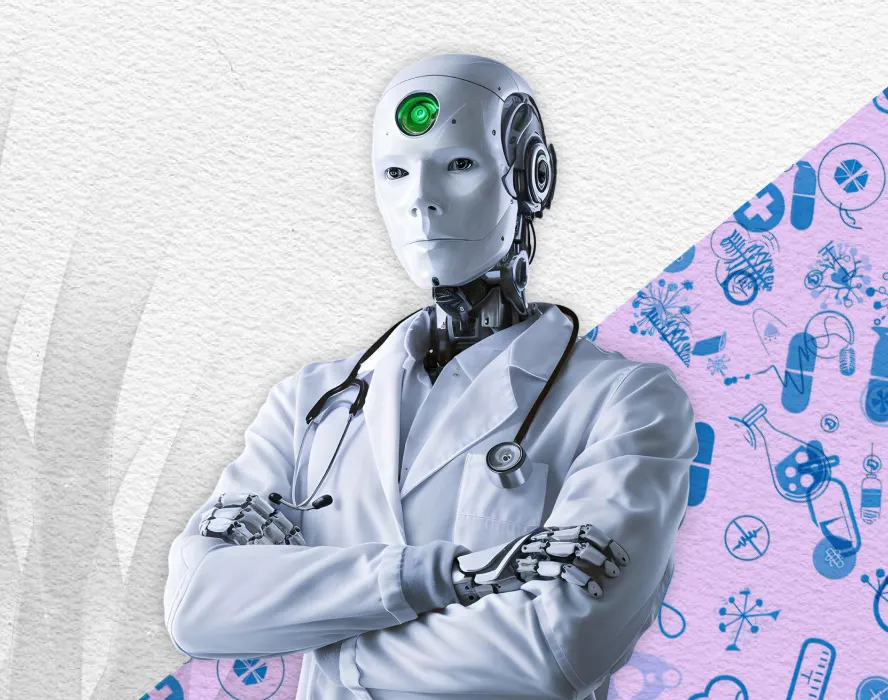
AI is transforming healthcare by improving diagnostics, automating workflows, and enhancing patient outcomes. And honestly… it’s about time. Because healthcare can be amazing, but also sometimes slow and overwhelming.
Now with modern ai solutions, things are getting smarter, faster, and way more organized. Even small clinics can use ai applications in business to improve daily work without stress.
Why AI Is Transforming the Healthcare Industry
AI is not just a trend — it’s becoming the core of how modern healthcare works.
Healthcare systems are adopting AI to improve efficiency, accuracy, and scalability.
Let’s be real. Healthcare systems are under pressure. Too many patients, not enough time, and doctors doing 10 things at once.
That’s why the benefits of ai are so important right now. AI helps reduce errors, speed up processes, and support better decisions.
One of the biggest ai trends is using smart systems to connect everything — data, teams, workflows. So nothing gets lost, and everything works smoother.
It’s not magic. It’s just smart technology finally used in the right place.
1. Improved Diagnostics and Decision-Making
AI helps doctors understand patient data faster and more clearly.
AI analyzes medical data to assist doctors in making faster and more accurate decisions.
Imagine a doctor looking at hundreds of test results. It’s a lot. And humans can get tired.
This is where machine learning solutions help. AI can scan huge amounts of medical data in seconds and highlight important details.
With strong ai data solutions, doctors get support in detecting diseases earlier — sometimes even before symptoms become serious.
For example, AI can analyze X-rays, MRIs, and lab reports with very high accuracy. It doesn’t replace doctors, but it gives them a powerful second opinion.
And honestly, if I were a patient, I would feel more safe knowing there is extra “brain power” helping my doctor.
2. Automation of Administrative Processes
AI takes care of boring tasks so healthcare workers can focus on people.
AI reduces manual work in scheduling, billing, and documentation.
If you ever had to deal with medical paperwork… you know the struggle.
Appointments, insurance forms, billing — it takes so much time. But with ai automation, many of these tasks are done automatically.
Modern ai automation tools can schedule visits, send reminders, process invoices, and even update patient records.
This means less human error and less stress for staff. And also — fewer delays for patients.
Doctors didn’t choose this job to sit in front of a computer all day. AI helps bring them back to real care.
3. Personalized Patient Care
AI helps make healthcare more personal and more effective.
AI enables tailored treatment plans based on patient data and predictive analytics.
Every person is different. Different body, lifestyle, history. So treatment should also be different.
With modern ai business solutions, healthcare providers can create personalized care plans for each patient.
Using ai for business, systems analyze patient data and predict which treatments will work best. This reduces risks and improves results.
For example, AI can suggest medication adjustments or lifestyle changes based on real data — not just general recommendations.
And I like this part a lot. Because it feels like healthcare finally sees you as a person, not just a case.
4. Faster Drug Discovery and Research
AI is helping bring new treatments to patients much faster.
AI accelerates research processes and reduces time to market for new treatments.
Before AI, developing new drugs could take many years. Sometimes too long.
Now, with support from an experienced ai development company, research teams can analyze thousands of chemical combinations quickly.
Advanced software engineering services help build systems that simulate experiments and predict outcomes.
This means scientists can focus on the most promising options instead of testing everything manually.
In simple words — less guessing, more smart decisions.
And for patients, it means faster access to new treatments. Which is kind of amazing.
5. Scalable Healthcare Systems
AI helps healthcare systems grow without losing quality.
AI helps healthcare organizations scale services while maintaining quality.
Healthcare demand is growing everywhere. More patients, more data, more complexity.
With strong business software solutions, hospitals can manage operations more efficiently.
And ai enterprise solutions allow organizations to expand services without chaos.
For example, AI can help manage patient flow, optimize staff schedules, and predict peak times.
So even when the system grows, it still works smoothly.
No overload. No panic. Just smart scaling.
Challenges of Implementing AI in Healthcare
AI is powerful, but implementation needs careful planning.
Data privacy, system integration, and regulatory compliance are key barriers.
Healthcare data is very sensitive. So security is always number one.
Professional ai implementation services make sure systems are safe and compliant with regulations.
Also, many hospitals already use older systems. That’s why ai integration services are needed to connect new tools with existing infrastructure.
This part can be complex, yes. But with the right approach, everything can work together.
The key is not to rush — but to do it correctly.
How ReNewator Delivers AI Solutions for Healthcare
The right partner makes AI adoption much easier.
We build secure, scalable AI systems tailored to healthcare needs.
ReNewator focuses on real results, not just technology.
Through expert ai consulting services, the team first understands your goals and challenges.
As an experienced ai consulting company, they design solutions that fit your processes — not the other way around.
From idea to implementation, everything is clear and structured. No confusion, no unnecessary complexity.
Just solutions that actually work in real healthcare environments.
The Future of AI in Healthcare
AI will continue to shape how healthcare evolves.
AI will continue to drive innovation and efficiency across the healthcare ecosystem.
The future of ai in business — especially in healthcare — is very exciting.
We will see more predictive care, where diseases are detected early. More remote monitoring. More smart systems helping doctors every day.
Healthcare will become faster, more accurate, and more accessible.
And honestly, it will feel less stressful — for both patients and professionals.
Frequently Asked Questions
Q: How is AI used in healthcare today?
AI is used for diagnostics, data analysis, workflow automation, and personalized treatment planning.
Q: Is AI safe for medical applications?
Yes, when developed with proper security measures and compliance standards, AI is safe and reliable.
Q: What are the main benefits of AI in healthcare?
Improved diagnostics, automation of processes, personalized care, faster research, and scalable systems.
Q: How long does AI implementation take?
It depends on the project complexity, but typically ranges from a few months to a year.
Q: Can AI integrate with existing healthcare systems?
Yes, with professional integration approaches, AI can work smoothly with existing systems.